
Since the beginning of time, our ancestors have honoured the passing of cycles and seasons. They watched the sky, the movement of light, the transformation of nature, and remembered what we so easily forget: that nothing is permanent. Everything is temporary. Everything changes. And everything is connected.
Around 21 December each year, we celebrate Yule, the ancient festival of the Winter Solstice: the shortest day and longest night of the year. From this day forward, the light begins to return, little by little, until the Summer Solstice around 20–21 June.
Below, my dear one, are seven gentle ways to celebrate Yule and the winter solstice at home: simple rituals for a season of shadow and returning light.
Yule at a glance
When: Monday 21 December 2026, the longest night of the year in the Northern Hemisphere.
What: Yule, the old midwinter festival of the returning light.
Seven ways to celebrate: gather with someone you love · bring in the light · make a Yule wreath or winter altar · a Yule cleanse · a warming lavender foot bath · gratitude notes · sit in the dark, then light one candle.
What is Yule?
Yule is the old midwinter festival of the returning light, celebrated around the winter solstice. It is one of the eight festivals on the Wheel of the Year, the turning point when the nights stop growing longer.
Many of the old Yule traditions inspired what later became Christmas, but before the gifts and the glitter, this was a celebration of the Earth's rhythm, of darkness giving birth to light again.
You don't need to follow any particular belief to celebrate it. A candle, a quiet evening and a little attention to the light are enough.
When is the winter solstice in 2026?
This year, the winter solstice arrives on Monday 21 December 2026 at 20:50 UTC. That's 21:50 in Germany and most of Europe, and 15:50 on the US East Coast.
If you're reading from Australia, New Zealand or South Africa, your winter solstice falls around 20–21 June. Save this for your midwinter.
Why the longest night is an invitation to rest
Winter is here. The air is cold. The nights stretch long. We retreat to our homes, our blankets, our inner worlds. This quiet withdrawal is not laziness; it is nature's way of preparing us for renewal.
In midlife, many of us know this season from the inside: a threshold where something is ending before the next thing has a name. The longest night doesn't ask you to hurry through it. Darkness, warmth and stillness are exactly what a tired body has been asking for all year.
Below are some simple ways to celebrate this season of transition, a season of shadow and returning light.

1. Gather with someone you love
Yule was always a time of connection, of gathering around fires, food, and stories.
Plan a small, intimate moment with someone who matters to you: a long conversation with a close friend, an afternoon with a cousin or niece, a quiet evening with your sister.
It doesn’t have to be elaborate. The place doesn’t matter: a café, a kitchen, a walk outside. What matters is the intention: to connect deeply, to speak honestly, to share warmth.
2. Bring in the light
When the sun shines, open your curtains wide. Let its light and warmth reach you.
When darkness falls, light candles, turn on gentle lamps, or hang twinkling garlands.
Each small flame reminds us: even in darkness, light exists.
3. Make your winter wreath or altar
Gather what nature offers: small branches, pine needles, cinnamon sticks, holly leaves, pinecones, acorns, dried oranges.
Gather gently: choose what has already fallen, and take only a little from any one plant.
Bind them together with string, or place them freely in a bowl. Let it smell of forest and warmth. You can hang it on your door, or keep it on your table as a small altar to winter, a way to say, I see you, season. I'm here with you.
Your dried wreath is beautiful and very, very dry, so let real flames live elsewhere in the room, or tuck a little battery candle into its centre.
4. A Yule cleanse for your home and spirit
The Solstice marks renewal, and renewal needs space.
In your home: sort through your belongings. Donate what you no longer use. Let go of the unnecessary.
In your spirit: write a list of what no longer serves you : old patterns, worries, relationships, habits.
Read the list softly to yourself, and say: it’s finished. It’s done. I am ready to move on.
Then tear or burn the paper, symbolically releasing it to the fire.
5. A warming lavendar foot bath for the longest night
Warm your body with a relaxing foot bath.
In a basin or tub, mix:
30 grams of baking soda
¼ teaspoon of menthol crystals, crushed fine and stirred into the baking soda
1 cup of dried lavender flowers
Add hot water and let the lavender steep for a few minutes. When the water feels comfortably warm, soak your feet for about 15 minutes. It will warm you, relax you, and remind you that care begins with small gestures.
Just a pinch of menthol is enough, my dear one. Stirring it through the soda first helps it melt into the warmth instead of resting on your skin. Keep your face a little back from the steam. If you're pregnant or breastfeeding, live with epilepsy, have cracked or sensitive skin, or are sharing this with a little one, leave the menthol out and let lavender hold you instead. And let the cat sleep in another room tonight.
6. Write gratitude notes to the people who held you this year
Think of the people who have touched your life this year, those who helped, listened, or supported you, whether closely or quietly from afar. Write them a small note or message of gratitude.
Thank you, you mattered to me this year. Sometimes a few words can warm the heart like sunlight.
7. Sit in the dark, then light one candle
Take a few minutes tonight to simply sit in darkness. No candles, no lamps, just stillness. Let your eyes adjust. Listen.
There’s beauty in the quiet, in what asks nothing of you. When you’re ready, light one small candle. Notice how that single flame transforms the space.
Light will always find its way back
The Winter Solstice reminds us: light and darkness aren’t enemies. They dance together.
This night — the longest night — is an invitation to pause, reflect, and remember that life moves in cycles. What fades will return. What sleeps will wake.
May this season bring you rest, warmth, and the quiet knowing that light will always find its way back. To the sky, to the Earth, and to you.
What you'll need for your Yule evening
None of this needs buying new. Gather what you already have:
A few candles, and one small one for sitting in the dark
Paper, a pen and a fireproof bowl
Foraged greenery, cones and dried orange slices, plus string
A basin, baking soda, dried lavender and a pinch of menthol crystals
A few notecards for your gratitude notes
Your Yule and winter solstice questions
When is the winter solstice in 2026?
Monday 21 December 2026, at 20:50 UTC (20:50 in Portugal and the UK, 21:50 in central Europe). It's the longest night of the year in the Northern Hemisphere.
What is Yule?
Yule is the old midwinter festival of the returning light, celebrated around the winter solstice. It marks the turning point when the nights stop growing longer, and it's one of the eight seasonal festivals on the Wheel of the Year.
Is Yule the same as Christmas?
Not quite. Yule is the older midwinter festival tied to the solstice. Christmas is the Christian feast on 25 December. Some customs, like evergreens, candles and the Yule log, belong to both.
Do I have to be pagan to celebrate Yule?
No. You don't need any belief system to honour the longest night. Lighting a candle, resting and noticing the light return is open to everyone.
Can I celebrate the winter solstice alone?
Yes, and it can be one of the gentlest ways to do it. Every ritual here works on your own: a candle, a list, a warm foot bath, an early night.
Do the days get longer after the winter solstice?
Yes. From the solstice on, the days slowly lengthen again in the Northern Hemisphere. The change is only a minute or two at first, but the light has turned.
If you'd like a tiny, no-pressure creative invitation for these dark evenings, my Truffles of Joy are waiting for you.
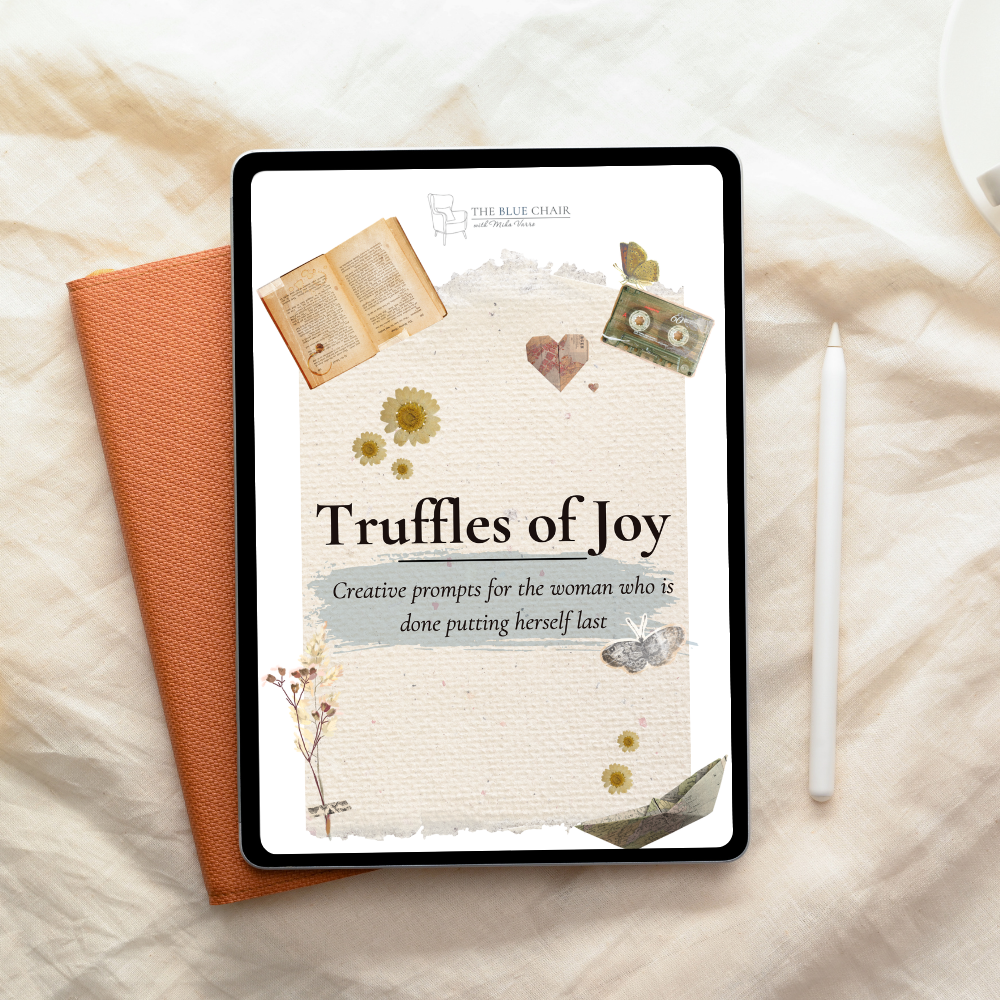
Short ceative prompts for the woman who is done putting herself last.
